


Posted by Paul de Bruin on Oct 19th 2026
Electric Blue Day Gecko (Lygodactylus williamsi): An Introduction
The Electric Blue Day Gecko (Lygodactylus williamsi) is a remarkable small reptile native to a highly restricted area of Tanzania. This introduction explores the species’ discovery and classification, distinctive coloration and anatomy, differences between males and females, climbing adaptations, daily activity, and territorial behavior. It also examines the gecko’s geographic range, close association with Pandanus rabaiensis, native forest habitat and climate, the pressures that have driven its population decline, and ongoing efforts to protect and conserve this Critically Endangered species.
By Paul de Bruin
Common Name(s):
Electric Blue Day Gecko a.k.a. Turquoise Dwarf Gecko
Scientific Name:
Lygodactylus williamsi
Taxonomy:
- Kingdom Animalia
- Phylum Chordata
- Class Reptilia
- Order Squamata
- Family Gekkonidae
- Genus Lygodactylus
(Flecks, et al., Lygodactylus williamsi. The IUCN Red List of Threatened Species 2012: e.T14665363A14665385, 2012)
Species Description:
In 1952 Arthur Loveridge, a British born biologist and herpetologist, wrote about animals he saw and gathered during his travels to East Africa, particularly in Tanzania. In his journal, he wrote about a little-known, vibrantly-colored gecko. He described it as, "A startlingly turquoise-blue gecko from Tanganyika,” and he named it williamsi (Loveridge, 1952). Lygodactylus williamsi is only 8.5 centimeters from the snout to the tip of the tail, with the females of the species being slightly smaller. L. williamsi displays sexual di-chromatism, which is a form of sexual dimorphism[1] where the males and females of this species differ in color.
Both males and females have a black line that runs on each side of the head from the snout through the eye just past the neck. There is a second line which is V-shaped; this runs parallel to the other line and appears on top of the head.
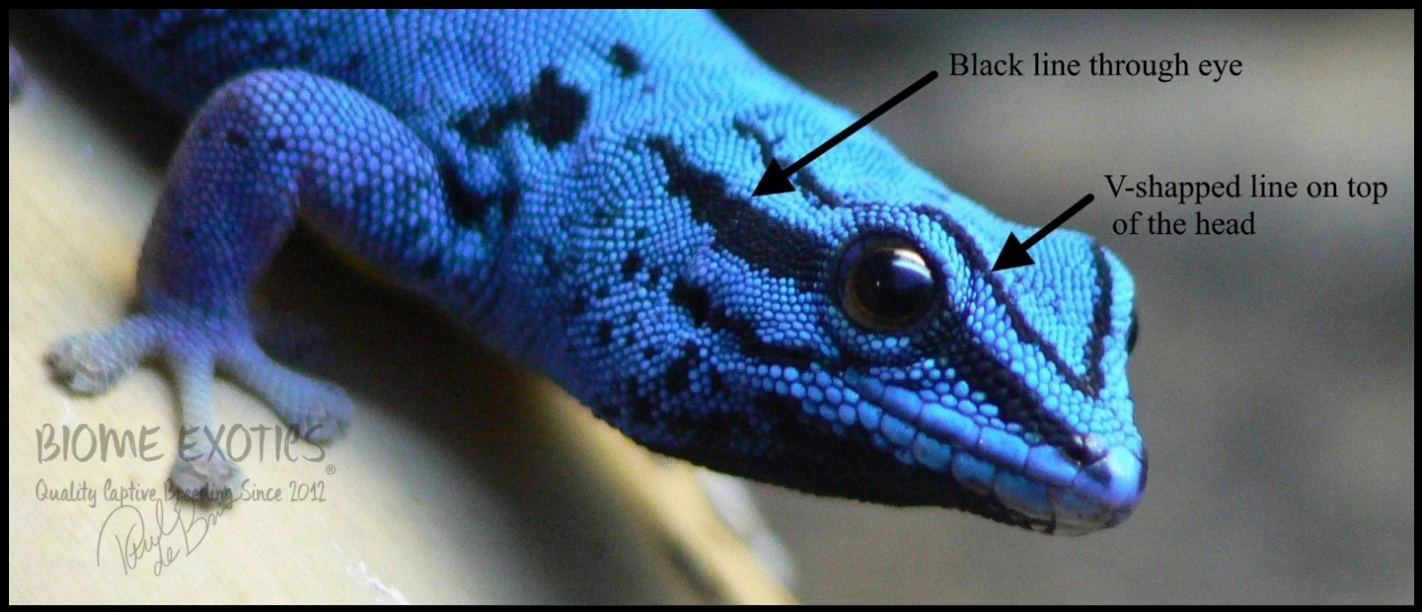
Image 1: The dark lines, a trait specific to the species, runs through the eye and creates a V on top of the head.
The base color of adult males is a bright electric blue, which extends over the entire top portion of the body. The females are colored either golden or various shades of green to blue-green. On the underside both sexes vary in color from pale yellow to bright orange. The throats of the males vary from shades of blue with black markings to solid black. The throats of the females are lighter blue to green devoid of markings. In some cases females can also exhibit a darker coloration of the throat (Baldamus & Hluschi, 2013).
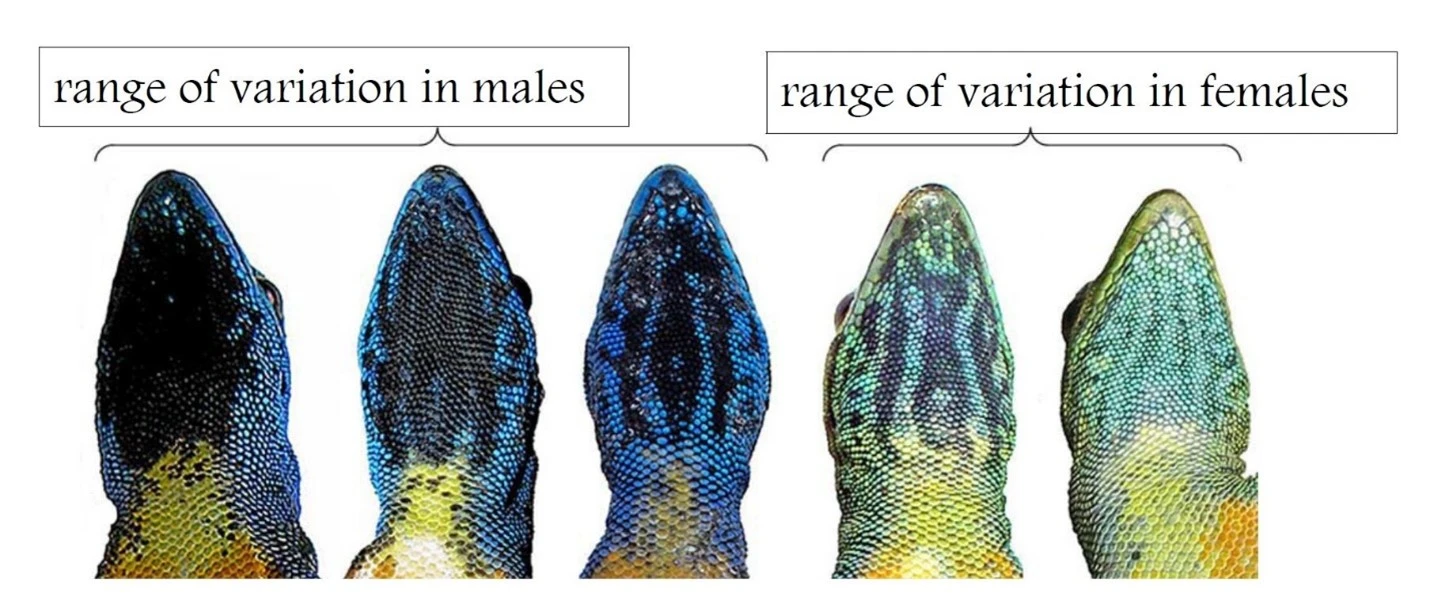
Image 2: Range of variation in throat color and markings in Lygodactylus williamsi. Photo by: M. Flecks & F. Weinsheimer.
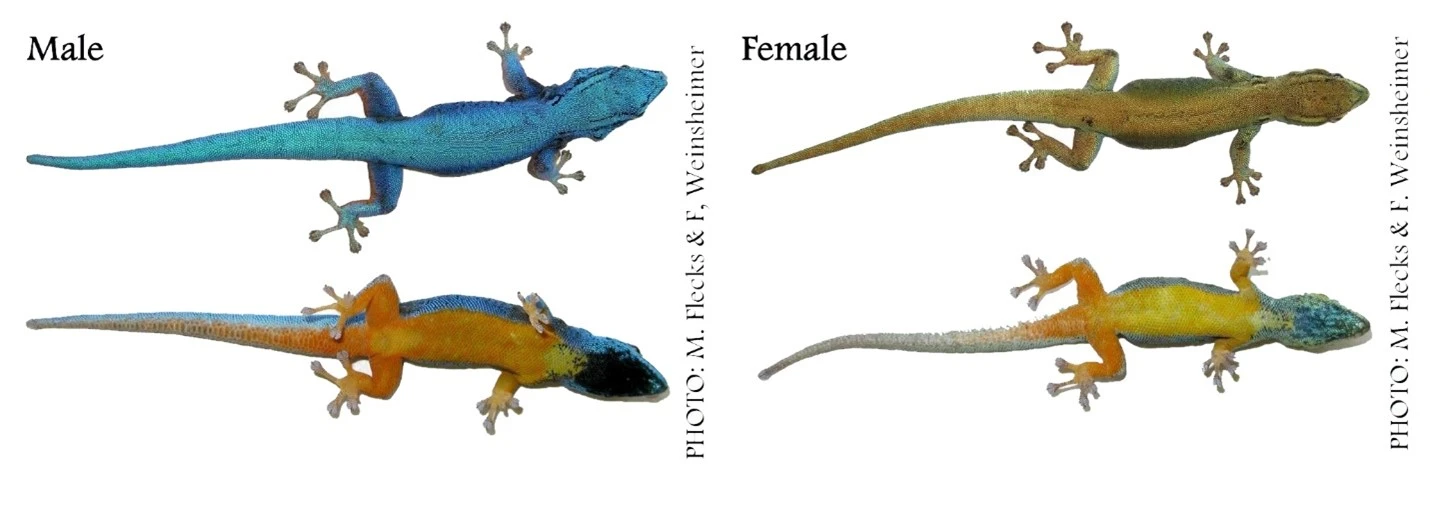
Image 3: Color differences between the Lygodactylus williamsi male and female. Photo by: M. Flecks & F. Weinsheimer.
The caudal autotomy (Reproductive area):
Between the hind legs, both males and females have pre-anal pores, but these are much more pronounced in the males. As with most young reptiles, it is very difficult to determine gender when the animals are still juveniles; but as they age, it becomes much easier to identify the pre-anal pores on the males (see Image 4).
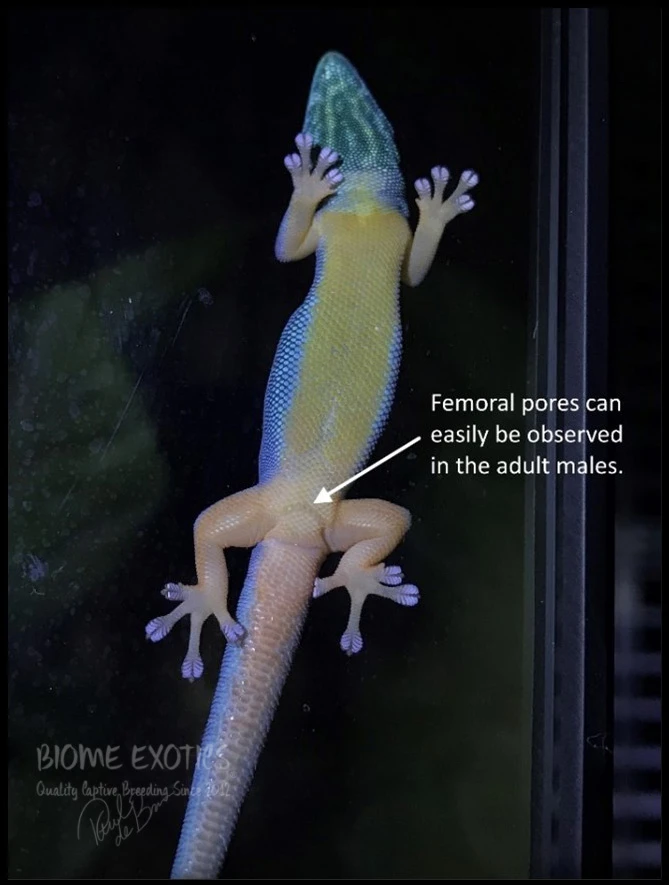
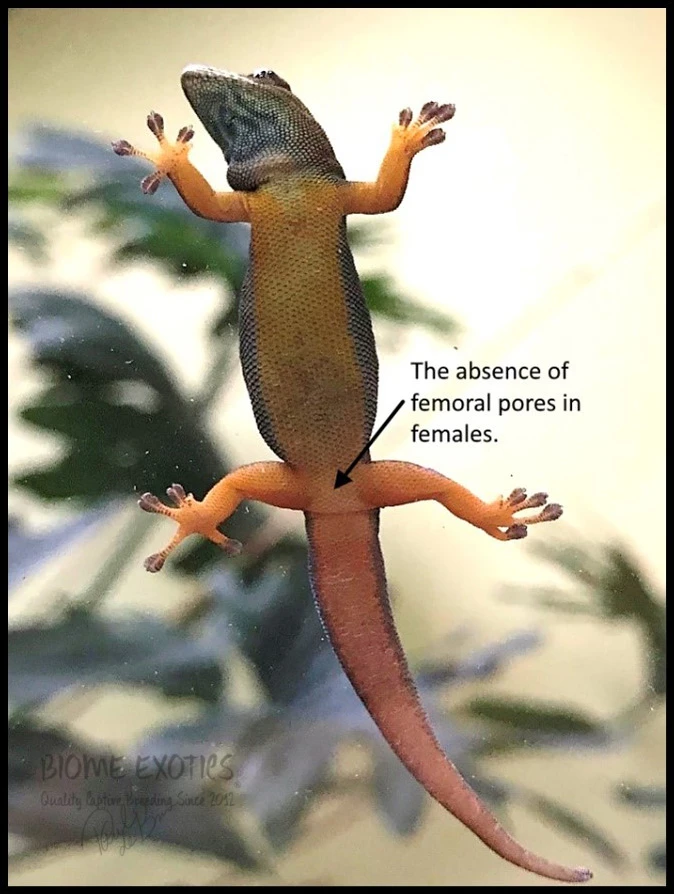
Image 4: Male and female Lygodactylus williamsi identification. Femoral pores, which are more clearly visible on the males, appear as a series of pits or holes within a row of scales on the ventral portion of the animal's thigh.
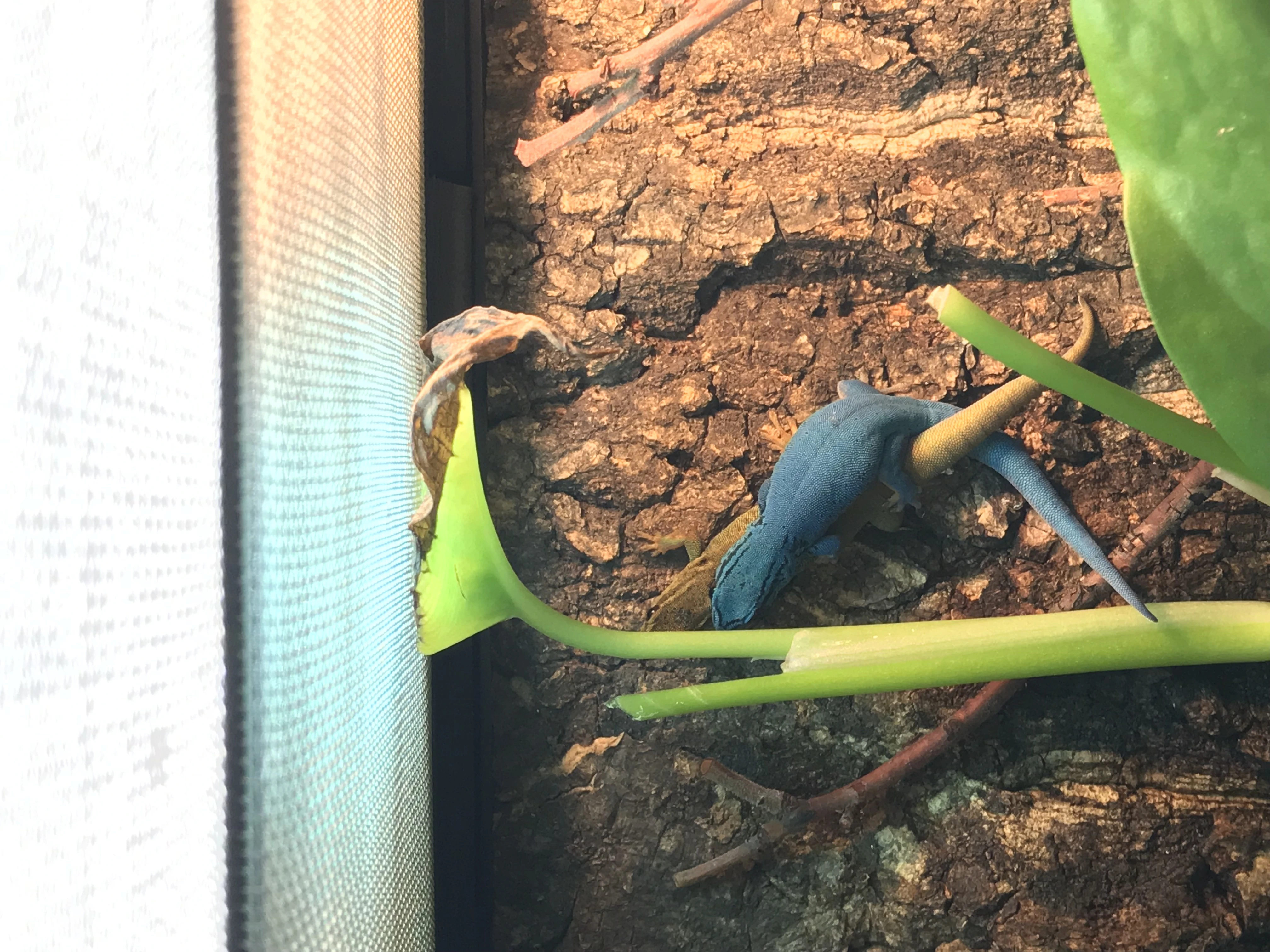
Watch this rare Image of a Lygodactylus williamsi pair successfully mating in a carefully maintained terrarium. Known as the Electric Blue Gecko, this critically endangered species displays fascinating courtship behavior leading up to successful copulation. This image captures the male's vibrant display and the female’s receptive posturing—essential behavior for successful captive breeding.
As with all the other species in the genus, Lygodactylus, williamsi can stick to visibly smooth surfaces because their bulbous toes are covered with hundreds of tiny microscopic hairs called setae. Each seta splits off into hundreds of even smaller bristles called spatulae, allowing them to virtually defy gravity.
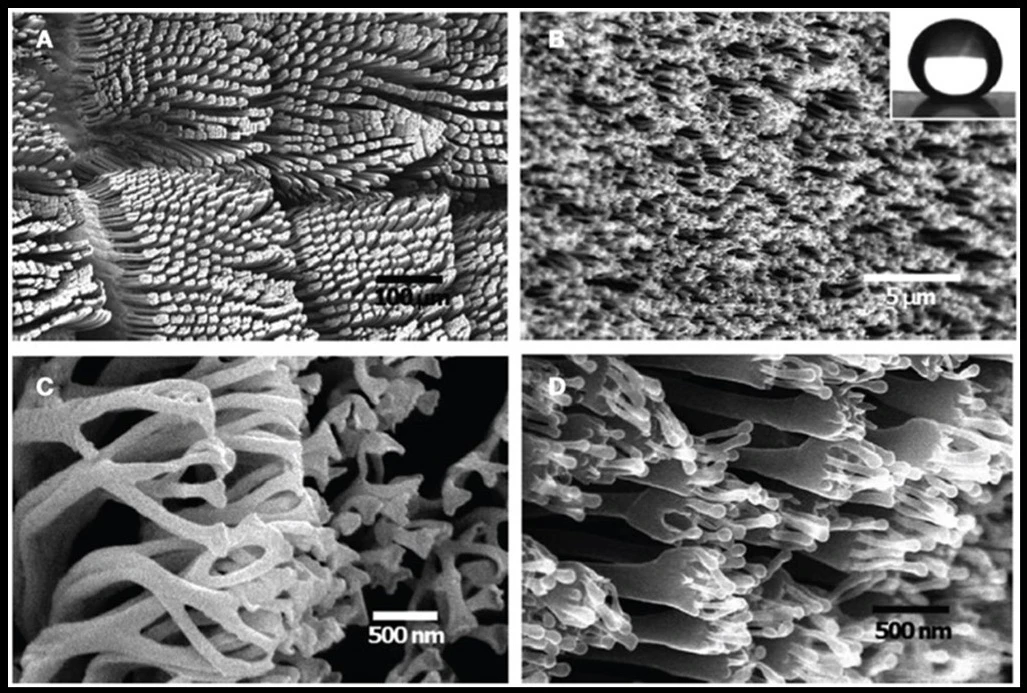
Image 5: A, B, C, and D are magnified images in progressive order of magnification, of a Lygodactylus williamsi toe pad. The microscopic setae are, arranged by the hierarchical fibrillar structure: Gecko toe pad, Gecko setae, a single seta, and the spatulae.
Vulnerability Status:
Currently Lygodactylus williamsi has been declared to be Critically Endangered.
Ongoing Conservation Efforts:
The Kimboza forest protection and management project was set up in 1964 and remains controlled by the Tanzania Forest Services Agency. It is currently recognized as an International Union for Conservation of Nature (IUCN) Category IV - Habitat/Species Management Area. The range where Lygodactylus williamsi lives falls inside the protected boundaries of the park and is regularly patrolled by forest rangers. Read more about the management project here: https://www.rufford.org/projects/charles_kilawe
The European Association of Zoos and Aquaria initiated the first Lygodactylus williamsi captive breeding project and studbook in 2013. Read more about the organization here: https://www.eaza.net/
Lygodactylus williamsi was placed under the Convention on International Trade in Endangered Species of Wild Fauna and Flora (CITES) Appendix I protection in January 2017 (CITES, 2017). CITES protects threatened and endangered animals through a system of classifications and licensing. Threated species are categorized into one of three Appendices: I, II, and III. Categorization often follow the species’ threat status on the Red List of the International Union for Conservation of Nature, which was first established in 1964. CITES Appendix I prohibits trade in species which are classified as highly endangered. Read more about CITES here: https://cites.org/eng
Conservation through Commercialization has been practiced for quite some time. This is an incredibly successful approach to reducing the overall demand for specimens collected in the wild and sold illegally in the global pet trade.
Activity Period:
Lygodactylus williamsi is considered diurnal; thus, it is active during the daytime. This makes the species especially attractive since it is visible and active during the day.
Notable Behavioral Traits:
This particular species can be very bold, territorial, active, and social. In the wild these animals generally live their entire lives on a single Pandanus plant, which is why the males are very territorial and won’t tolerate the presence of other males. Social gestures made may include lateral flattening, puffing out of the throat patch, head shaking, head bobbing, and tail-wagging. Many of these behavioral traits may also be observed in captivity. Colors of individuals can also vary depending on their mood, stress level or temperature. Male colors can range from black, to gray, to brilliant electric blue. The females range from dark brown to brilliant green with turquoise highlights.
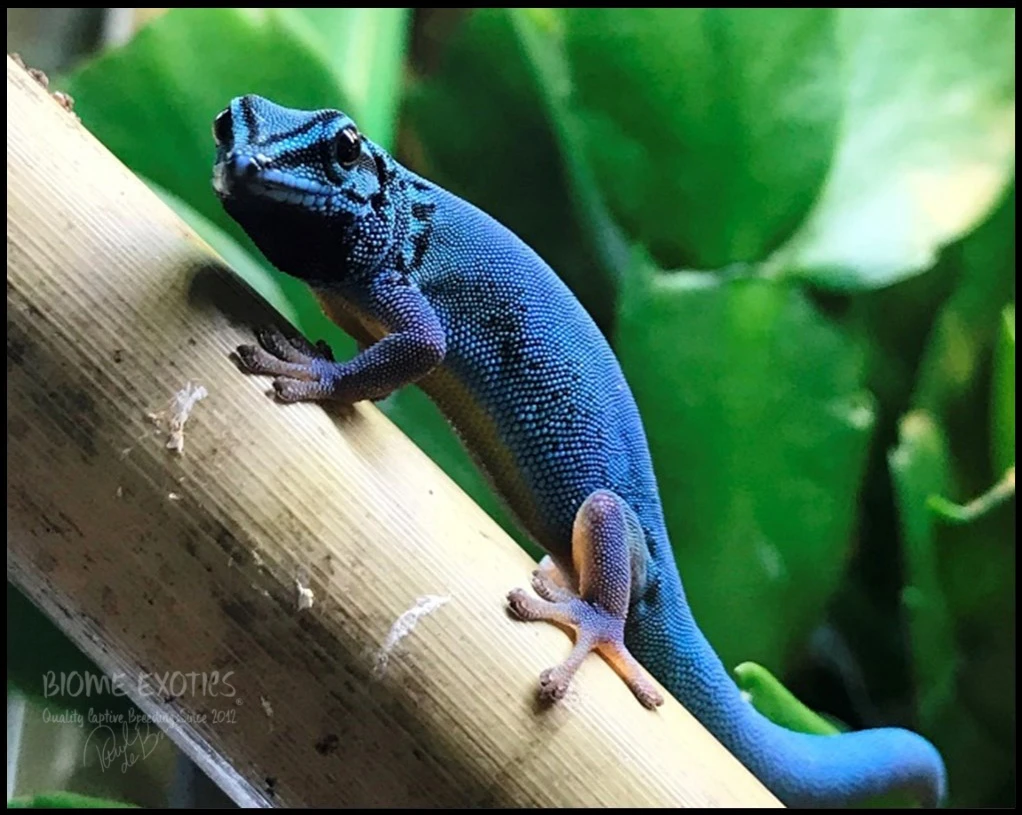
Image 6: A captive bred male Lygodactylus williamsi making territorial gestures to a rival male by puffing his throat sack, arching his back and bobbing his head up and down.
Geographic Range:
These brilliantly colored denizens of a microhabitat can only be found on the African continent in the United Republic of Tanzania. The species is confined to a minuscule 20 square kilometer area within the Kimboza and Ruvu Forest Reserves in the Morogoro Region.
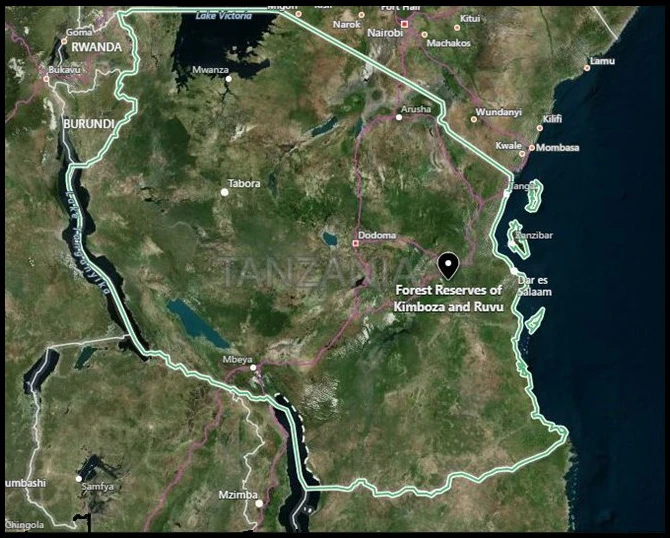
Image 7: Map of Tanzania, depicting the only known location for Lygodactylus williamsi.
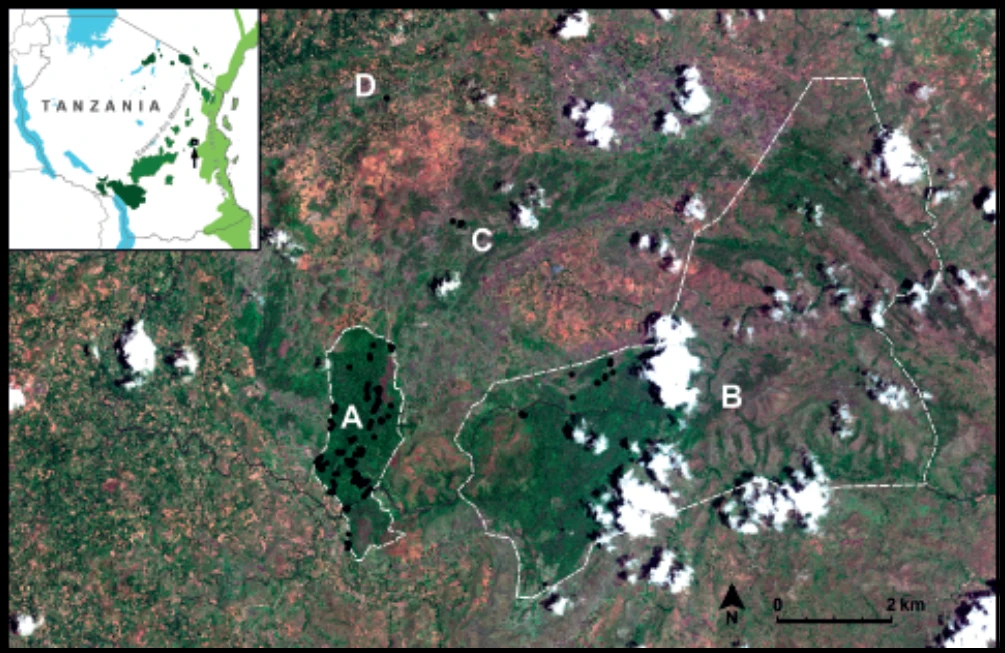
Image 8: Distribution of Lygodactylus williamsi. Dashed lines indicate the reserve borders of the Kimboza Forest Reserve (A) and Ruvu Forest Reserve (B). Black dots indicate known colonies of Lygodactylus williamsi.
Wild Lygodactylus williamsi reside and propagate exclusively on a single type of native palm-like, dioecious tree called a screwpine, more commonly known by its scientific name the Pandanus rabaiensis Rendle. The genus Pandanus[2] falls in the major group entitled Angiosperms (The Plant List, 2013) (see image below). The Pandanus rabaiensis is not evenly dispersed around the Kimboza Forest, but occurs in isolated patches where it is commonly the dominant vegetation element (Flecks, et al., Watching extinction happen: the dramatic population decline of the critically endangered Tanzanian Turquoise Dwarf Gecko, Lygodactylus williamsi, 2012, pp. 12-20).
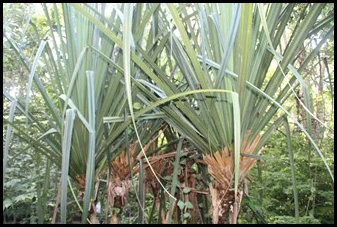
Image 9: Pandanus rabaiensis native to Kimboza Forest Reserve.
Habitat and Vegetation:
Lygodactylus williamsi inhabits the tropical forest along the eastern foothills of the Ulu-guru Mountains, at altitudes between 170 and 480 meters (560 - 1,570 feet), where they exclusively reside on the Pandanus rabaiensis plant. This plant only grows in swampy areas or in areas with a limestone substratum. Typically, only one male and one or more females, with several juveniles, inhabit a single Pandanus rabaiensis plant.
Climate:
The current mean annual temperature around the eastern slope of the Uluguru Mountain Forest in December is about 24.3° C with a maximum of 26.5° C and a minimum of 21.1° C in July (Lyamuya et al., 1994). This is up slightly according to Jens et al, who noted 1993 temperatures ranging from 19.5° C to a maximum of 22° C in December and a minimum of 17° C in July. The change in mean temperatures may be due to the effect of human alteration of the local habitat - specifically deforestation, which subsequently led to a decline of rainfall and cloud cover.
Populations and Reasons for their Decline:
Unfortunately, wild L. williamsi populations have been severely depleted due to habitat destruction, clearcutting for agriculture, the increased frequency of wildfires, population fragmentation, and illegal collection for the international the pet trade. It is estimated that about 15% of the species in the was illegally collected for pet trade between 2004 and 2009, and according to the International Union for Conservation of Nature and Natural Resources, the identifiable fraction or subdivision of the living population in the Kimboza Forest Reserves was estimated to be roughly 150,000 individuals in 2009 (Flecks, et al., Lygodactylus williamsi. The IUCN Red List of Threatened Species 2012: e.T14665363A14665385, 2012).
Another major impact leading to the decline of L. williamsi has been the introduction of an invasive tree species (Cedrela odorata) planted by locals as a source of lumber. Cedrela odorata was introduced to the Kimboza Forest Reserve in two phases. In 1957 there was trial phase, which involved planting the tree species in one two hectare[3] plot. This was followed by an establishment phase in 1960, whereby six hectares of Cedrela was planted with the aim of harvesting the fast growing tree for timber and firewood. A very thorough field research study was conducted by Dr. Charles J. Kilawe on the encroaching Cedrela odorata species in late 1957.
Even though the majority of the range where L. williamsi resides was reported to be within a protected area managed by the Tanzania Forest Services Agency, ongoing degradation of the remaining habitat from illegal logging, firewood collection, bushfires, and mining are still being reported, especially as a result of a lack of funding to employ additional rangers and equipment (Flecks, et al., Watching extinction happen: the dramatic population decline of the critically endangered Tanzanian Turquoise Dwarf Gecko, Lygodactylus williamsi, 2012).
Frequently Asked Questions
What is the conservation status of Lygodactylus williamsi, and what has led to its decline?
Lygodactylus williamsi is classified as Critically Endangered by the IUCN. Major factors in its decline include habitat destruction from agriculture, illegal logging, increased wildfires, invasive plant species, and illegal collection for the international pet trade (Flecks et al., 2012).
Where is Lygodactylus williamsi found in the wild, and what type of plant does it rely on?
This species is endemic to a 20 km² area in the Kimboza and Ruvu Forest Reserves in the Morogoro Region of Tanzania. It lives exclusively on the Pandanus rabaiensis plant, a native palm-like tree found in swampy or limestone-rich forest patches (Flecks et al., 2012).
What are the key physical and behavioral traits that distinguish male and female Lygodactylus williamsi?
Males are bright electric blue with darker throat markings, while females are golden or green-blue with lighter, unmarked throats. Males have visible pre-anal and femoral pores, which are less developed or absent in females. Behaviorally, males are highly territorial, often defending a single Pandanus plant from rivals.
What adaptations allow L. williamsi to climb smooth surfaces?
The gecko has bulbous toe pads covered in microscopic hair-like structures called setae, which split into spatulae. These structures allow for van der Waals interactions that enable the gecko to adhere to and climb vertical and smooth surfaces effortlessly.
What international protections are in place to help preserve Lygodactylus williamsi?
The species was listed under CITES Appendix I in 2017, which bans international trade of wild-caught individuals. Conservation efforts also include habitat protection by the Tanzania Forest Services Agency and a captive breeding program coordinated by the European Association of Zoos and Aquaria (EAZA).
What environmental changes have influenced the gecko's native habitat in recent decades?
Deforestation and human activity have led to increased temperatures and decreased rainfall and cloud cover in the Uluguru Mountain region. Additionally, the introduction of the invasive tree species Cedrela odorata has disrupted the natural ecosystem, further threatening the Pandanus plants that L. williamsi depends on.
Notes and Citations
[1] Sexual dimorphism is the condition where the two sexes of the same species exhibit additional characteristics beyond the differences in their sexual organs.
[2] This tree is a member of the family Pandanaceae.
[3] The hectare, which is primarily used in the measurement of land, is a metric system unit. One hectare is equal to approximately 2.47 acres.
References:
Baldamus, P., & Hluschi, D. (2013, Dec 21). The Genus Lygodactylus. Retrieved 2018, from dwarfgeckos.com: http://dwarfgeckos.com/lygodactylus/l_w/lygodactylus_williamsi.php
CITES. (2017). Consideration of Proposals for Amendment of Appendices I and II. CITES. Convention on International Trade in Endangered Species of Wild Fauna And Flora. Retrieved 2018, from https://cites.org/sites/default/files/eng/cop/17/prop/060216/E-CoP17-Prop-30.pdf
Flecks, M., Weinsheimer, F., Böhme, W., Chenga, J., Lötters, S., & Rödders, D. (2012). Lygodactylus williamsi. The IUCN Red List of Threatened Species 2012: e.T14665363A14665385. Retrieved 2018, from International Union for Conservation of Nature: http://dx.doi.org/10.2305/IUCN.UK.2012-1.RLTS.T14665363A14665385.en
Flecks, M., Weinsheimer, F., Böhme, W., Chenga, J., Lötters, S., & Rödders, D. (2012, April 30). Watching extinction happen: the dramatic population decline of the critically endangered Tanzanian Turquoise Dwarf Gecko, Lygodactylus williamsi. Salamandra, 48(1), 12-20.
Loveridge, A. (1952). A startlingly turquoise-blue gecko from Tanganyika. Journal of the East African Natural History Society, 20:(1), 446. Retrieved 2018
The Plant List. (2013). Pandanus rabaiensis Rendle., 1.1. Retrieved 2018, from The Plant List a Working list of all Plant Species: http://www.theplantlist.org/tpl1.1/record/kew-284851
Image References:
Image 5: Pattantyus-Abraham A, Krahn J, Menon C. 2013 Dec 30. Recent advances in nanostructured biomimetic dry adhesives. Frontiers in Bioengineering and Biotechnology. See: https://www.frontiersin.org/articles/10.3389/fbioe.2013.00022/full
Image 7: Bing. n.d. Map of Tanzania. Microsoft. See: https://www.bing.com/search?q=map+of+tanzania+africa&qs=AS&pq=map+of+tan&sk=AS1&sc=8-10&cvid=67A8F216CA6E40BC931DEDCBFD77A225&FORM=CHRDEF&sp=2
Image 8: Satellite image provided by Google Earth/GeoEye.
Image 9: Kilawe CJ. 2017 Aug 21. Invasive plant species Cedrela odorata replacing the habitat of Critically Endangered Lygodactlyus williamsi at Kimboza Forest Reserve. Sokoine University of Agriculture. See: https://www.sua.ac.tz/news/invasive-plant-species-cedrela-odorata-replacing-habitat-critically-endangered-lygodactlyus